Classification ·
Planetary Classification System · Keeper Survey Division
Stabilization Domain
Class I · Stabilization Domain
Transition Belt
Class II · Transition Belt
Hyper-Dynamic Zone
Class III · Hyper-Dynamic Zone
Dead Basin
Class IV · Dead Basin
00
Entry 00 Geological Classification Zones III–IV: Extreme Hazard
Planetary Zone Classification
Document ref: KPR-GEO-0000 · Survey Division · Standing Record

The Keeper network divides the surface world into four terrain classifications, established over two centuries of post-Lockdown documentation. The system was not designed. It emerged from the accumulated language of surveyors who needed to agree on what they were looking at before they could report it accurately.

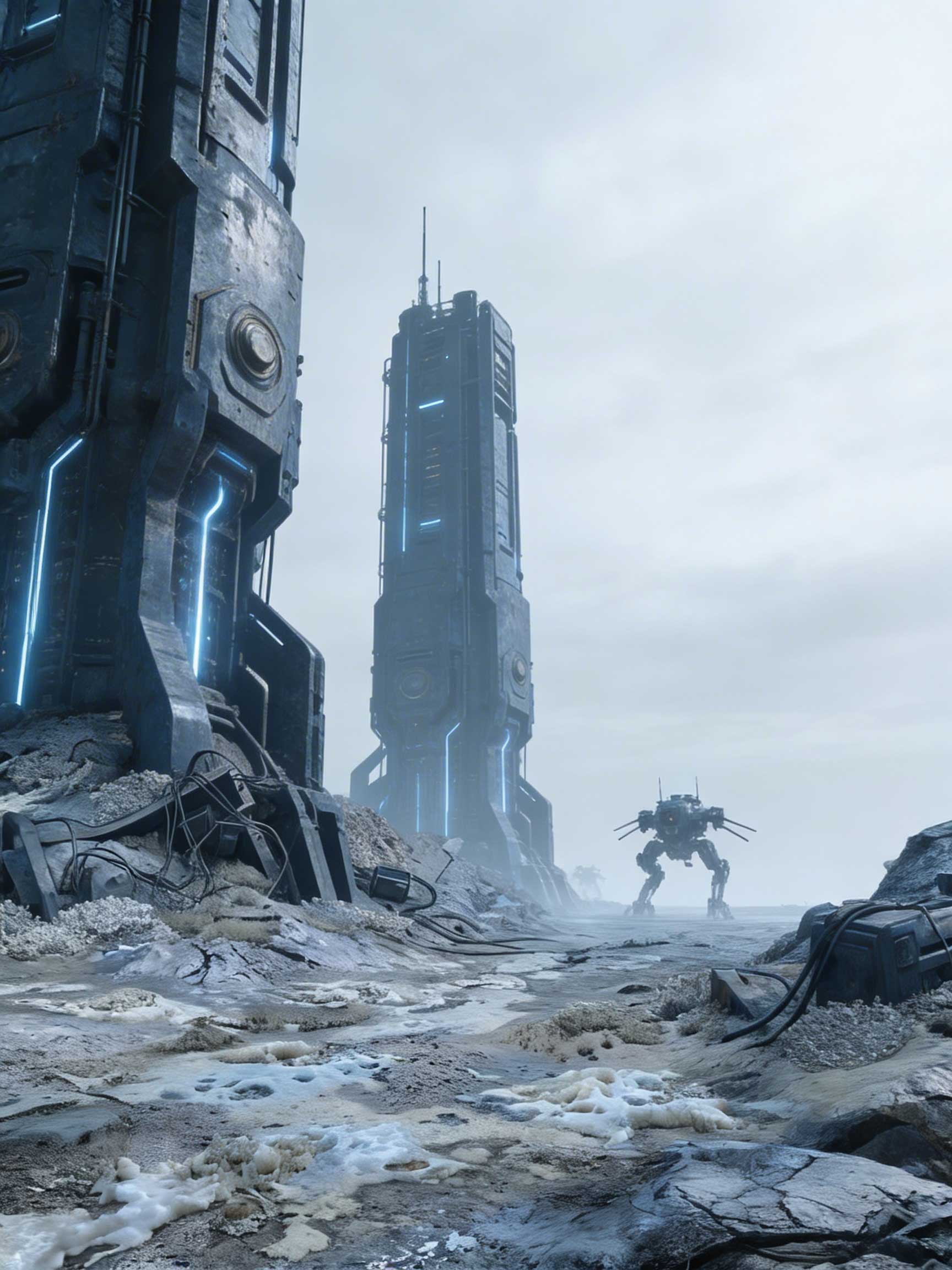
Class I — Stabilization Domains. Regions under active Vault node management. Geologically locked. The stillness here is not natural — it is imposed. Hunter mecha patrol the perimeter. Keepers are advised to document from beyond sensor range and not to linger. The network is failing, but slowly, and the failing nodes are the most unpredictable.

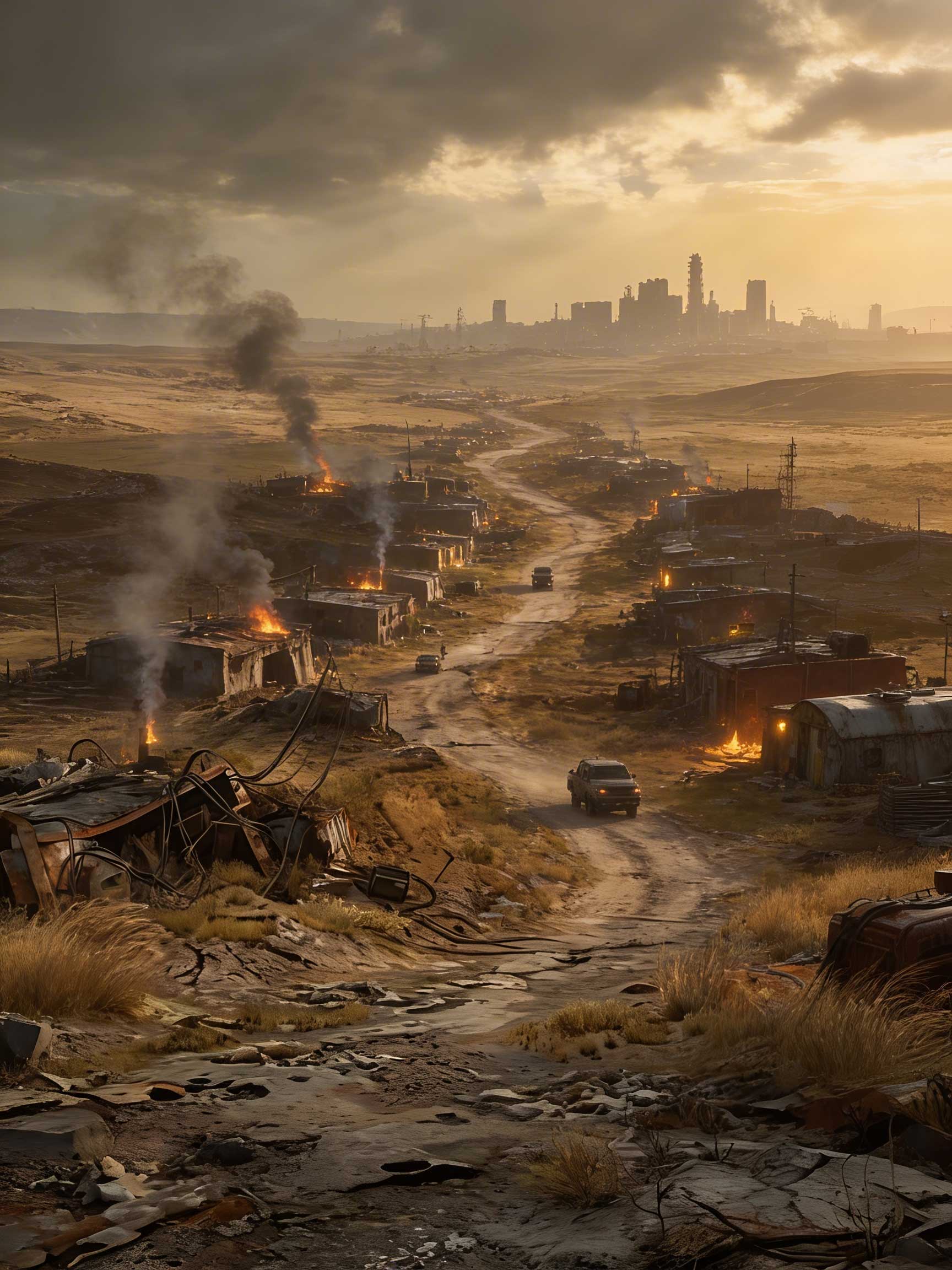
Class II — Transition Belts. The primary human survival band. Settlement clusters, convoy corridors, trade routes. Ground that holds without Vault support — for now. The eastern Eurasian corridor is the widest surviving belt. This is where most of the documented world lives.

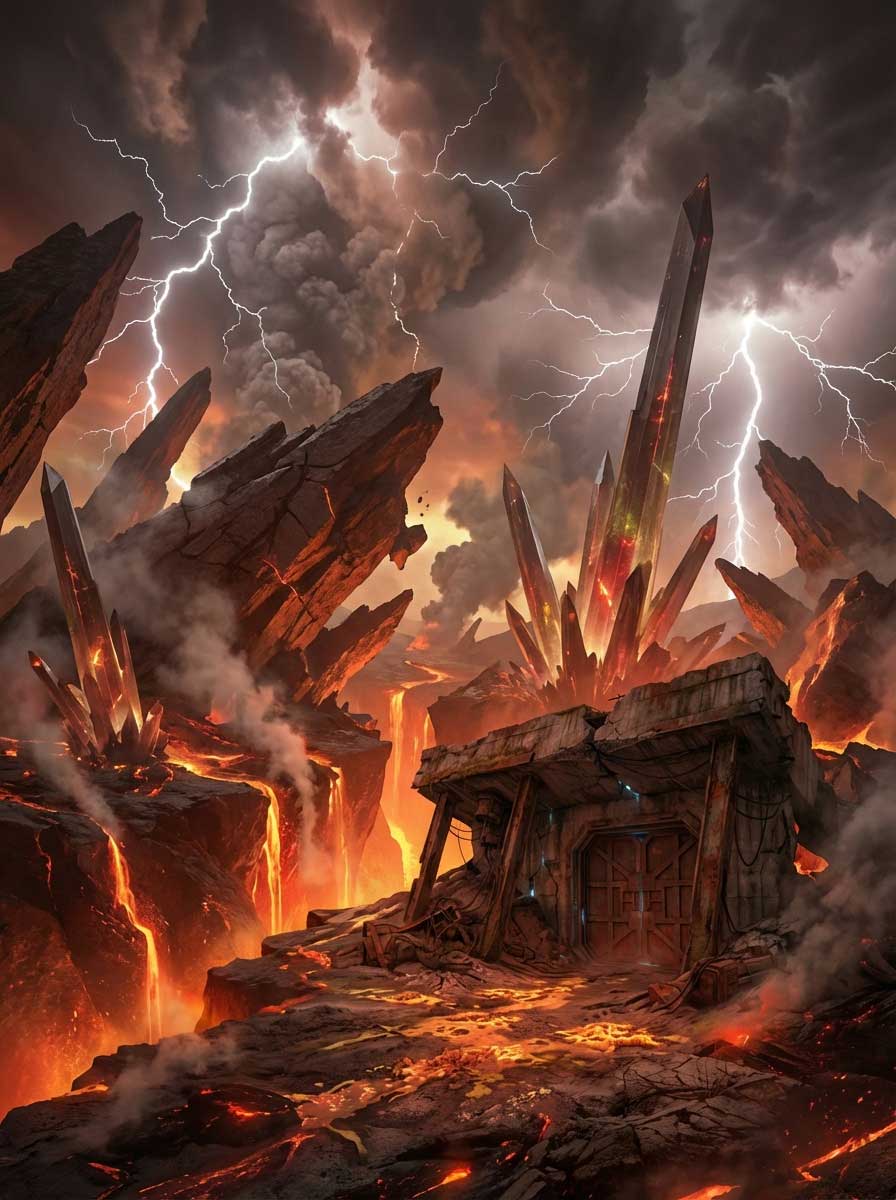
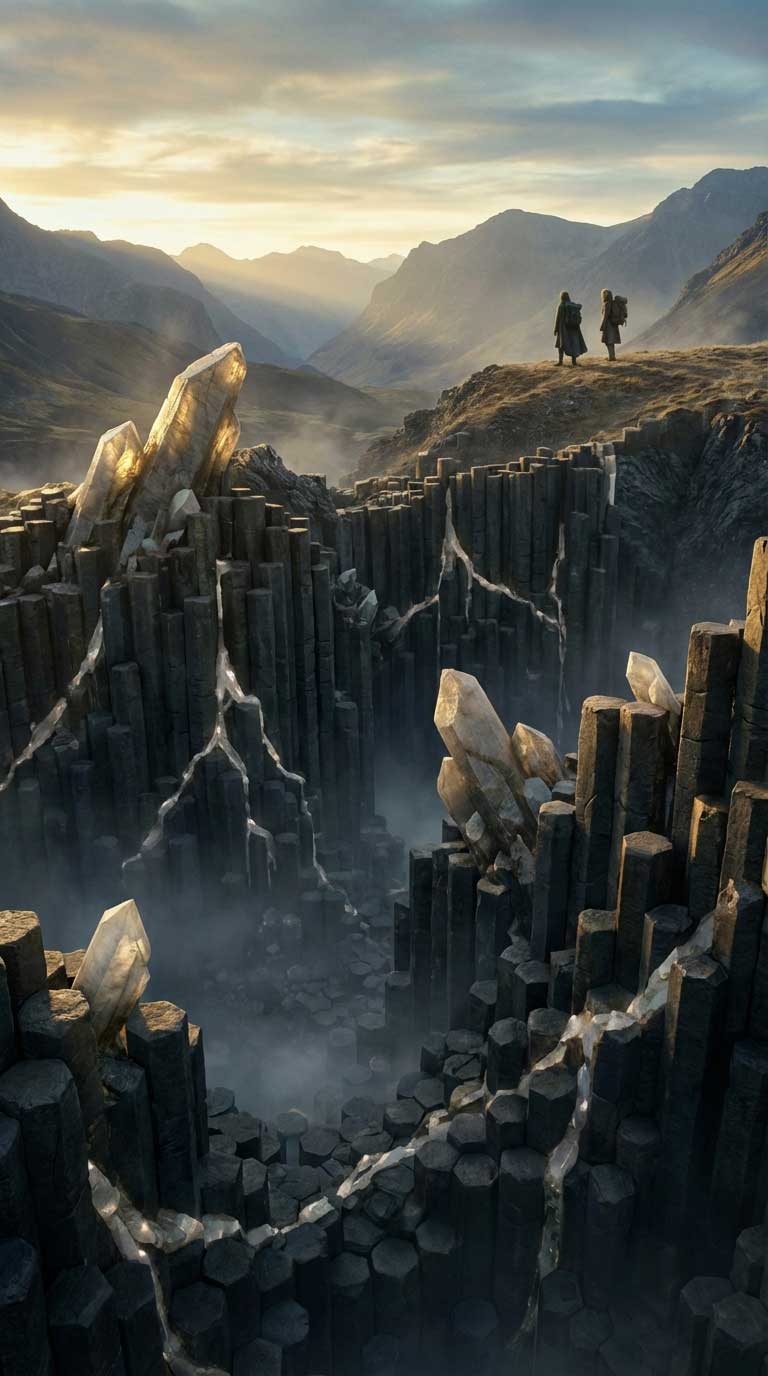
Class III — Hyper-Dynamic Zones. Active geological release regions. Pressure accumulated across two centuries of Vault containment escaping along uncontrolled boundaries. Crystal formations. Fissure events. Atmospheric discharge. These zones are expanding. Keepers do not enter without specific purpose and a confirmed exit route.

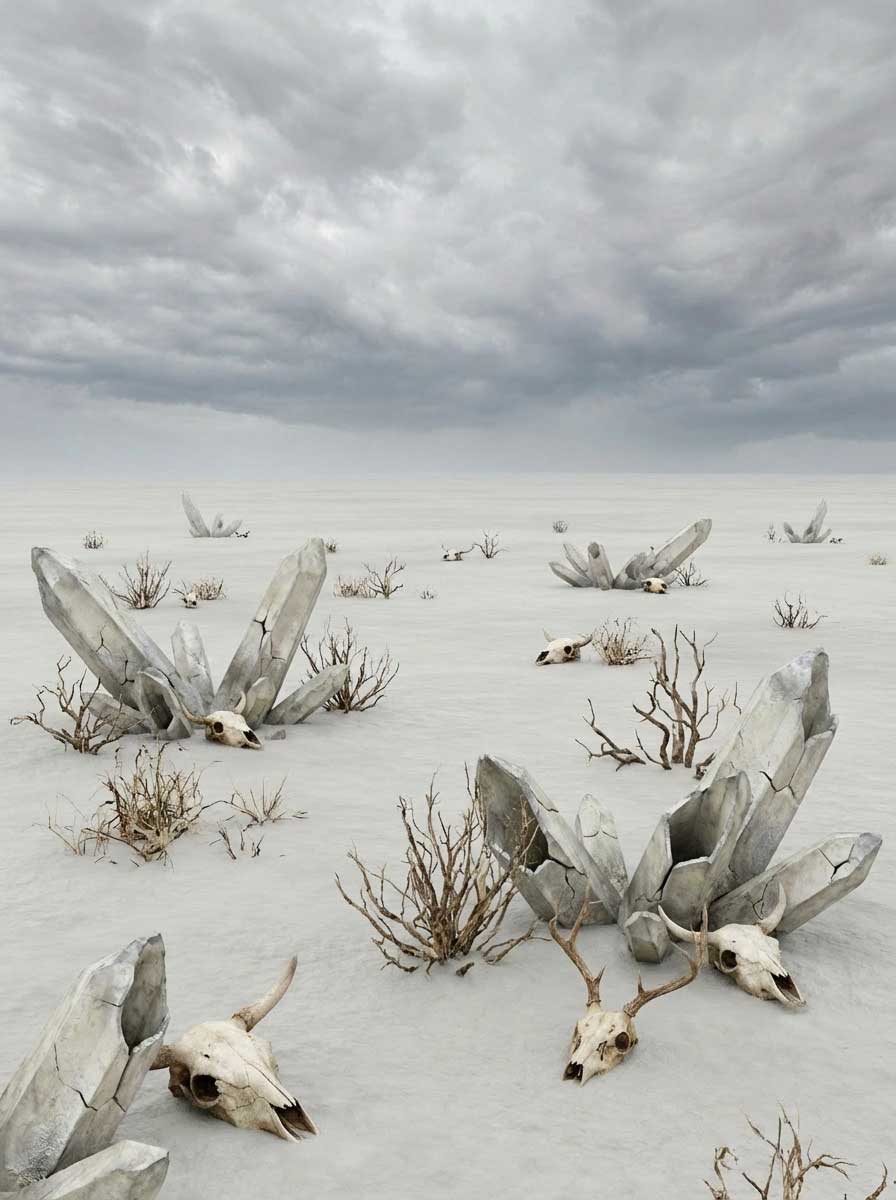
Class IV — Dead Basins. What a Hyper-Dynamic Zone becomes when the energy is spent. Sterile. Flat. Absolute. The mineral crust that forms after a full release event preserves the surface geometry of what came before it. Surveyors have noted the shapes. This record does not speculate on what that means.
Filed by: Survey Division, Keeper Network — Standing classification record · Updated continuously · Classification boundaries subject to ongoing revision as Zone III expansion continues.
Geological Anomaly · Eastern Corridor
Mineral Valley
02
Entry 02 Geological Location Expanding Restricted Access
Mineral Valley
Designation: Tashkent Anomaly · Status: Ongoing Documentation

It did not exist before the Collapse. This much the oldest records confirm. The valley appeared within a single season, approximately fifty years ago — a geological event with no precursor seismic activity in any surviving data, no fault line that accounts for the formation, no model that explains how basalt columns of that density and uniformity could have emerged from ground that showed no prior volcanic history. The Keepers who first documented it spent considerable effort searching for a natural explanation. The records from that period grow progressively shorter. The final entry from the original documentation team is four words: we are not going in.

What can be observed from the perimeter is this — the columns are still growing. Slowly, measurably, a few centimeters each season. The crystal formations that emerge between them are not consistent with any known mineral deposit in the region. They catch light in a way that suggests internal structure rather than surface refraction. The mist at the valley floor does not behave according to temperature or wind. Convoys that camp near the perimeter report sounds from below that the documentation teams have been unable to classify. Not mechanical. Not animal. Something that has no category yet.

The valley is avoided. This is not an official prohibition — no authority exists to issue one. It is simply what people do when they stand at the edge and look down. Some places are documented from a distance because that is what the place requires. Whatever is at the center of the Mineral Valley has been there for fifty years. It is not going anywhere.

Filed by: Keeper Yusra, Eastern Documentation Unit — Year 209, Post-Lockdown · Interior documentation remains open.
Vault Systems · Extreme Hazard Classification
03
Entry 03 Extreme Hazard No Engagement
Vault Retrieval Unit
Hunter Class · Engagement Protocol: None

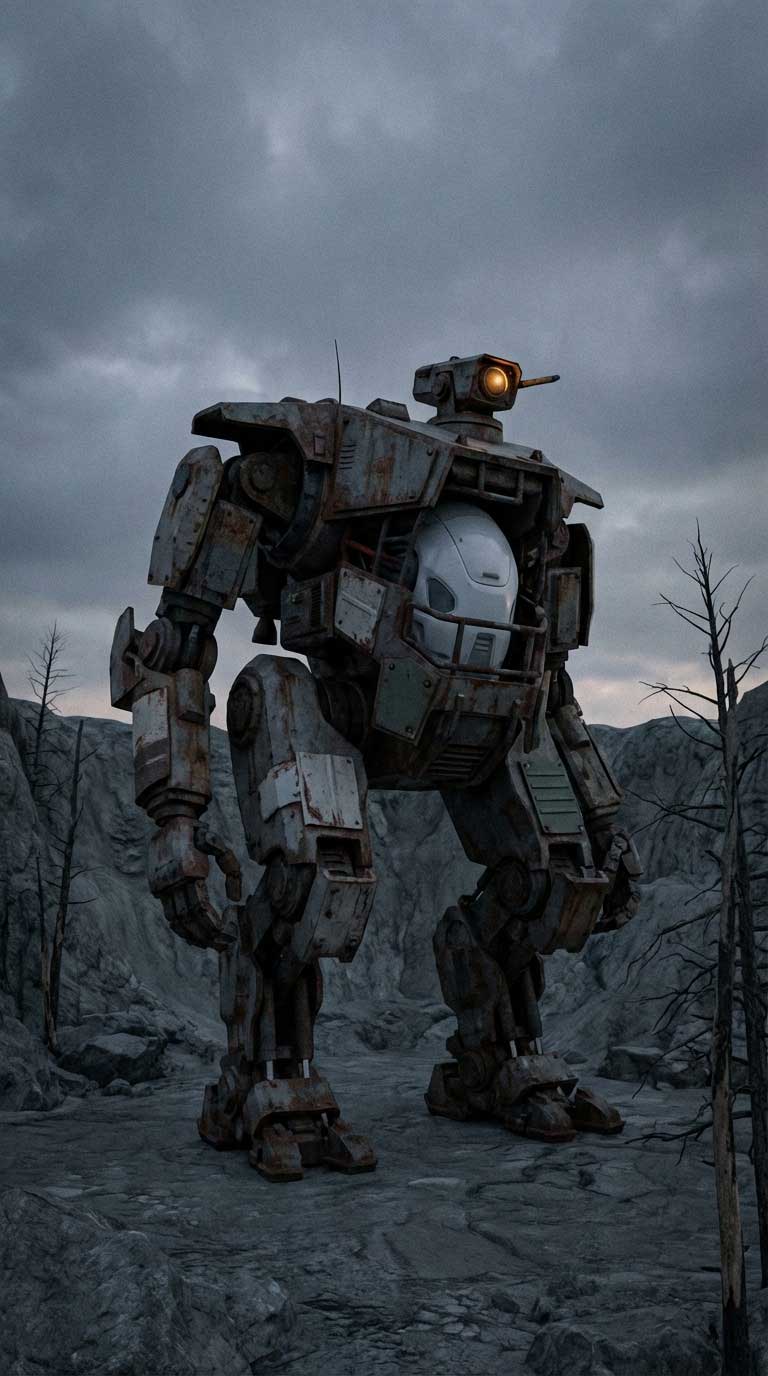
The Keepers have no name for it that everyone agrees on. Hunter is the most common. Some convoys call it the Eye, for the single amber sensor that remains lit regardless of how long the unit has been active or how much of its exterior has corroded. The rust is significant — these units have been operating on the surface for longer than most settlements have existed. They were not built for the weather. They were built for something else entirely, and the weather has not stopped them.

What is known has been assembled from survivor accounts, which are fewer than the sightings. The unit does not respond to sound or light or the presence of ordinary people. Convoys have passed within two hundred meters of a stationary Hunter without incident. It is tracking something specific. When it has a target it moves at a fixed pace that does not vary. It does not run. It does not need to. Survivors consistently report the same detail — by the time you hear the footsteps, the distance is already wrong. You thought you had more time than you had.

No confirmed record exists of a Hunter-class unit being destroyed by surface dwellers. This does not mean it is impossible. It means nobody who has tried has filed a report afterward. Every Hunter unit ever documented is moving east.

Filed by: Keeper Davan, Western Corridor Unit — Year 196, Post-Lockdown · This Keeper did not file subsequent reports.
Hunter-class Mecha
Settlement Record · Western Transition Belt
The Last City
07
Entry 07 Location Approach With Caution
The Last City
Designation: Unofficial · Location: Classified

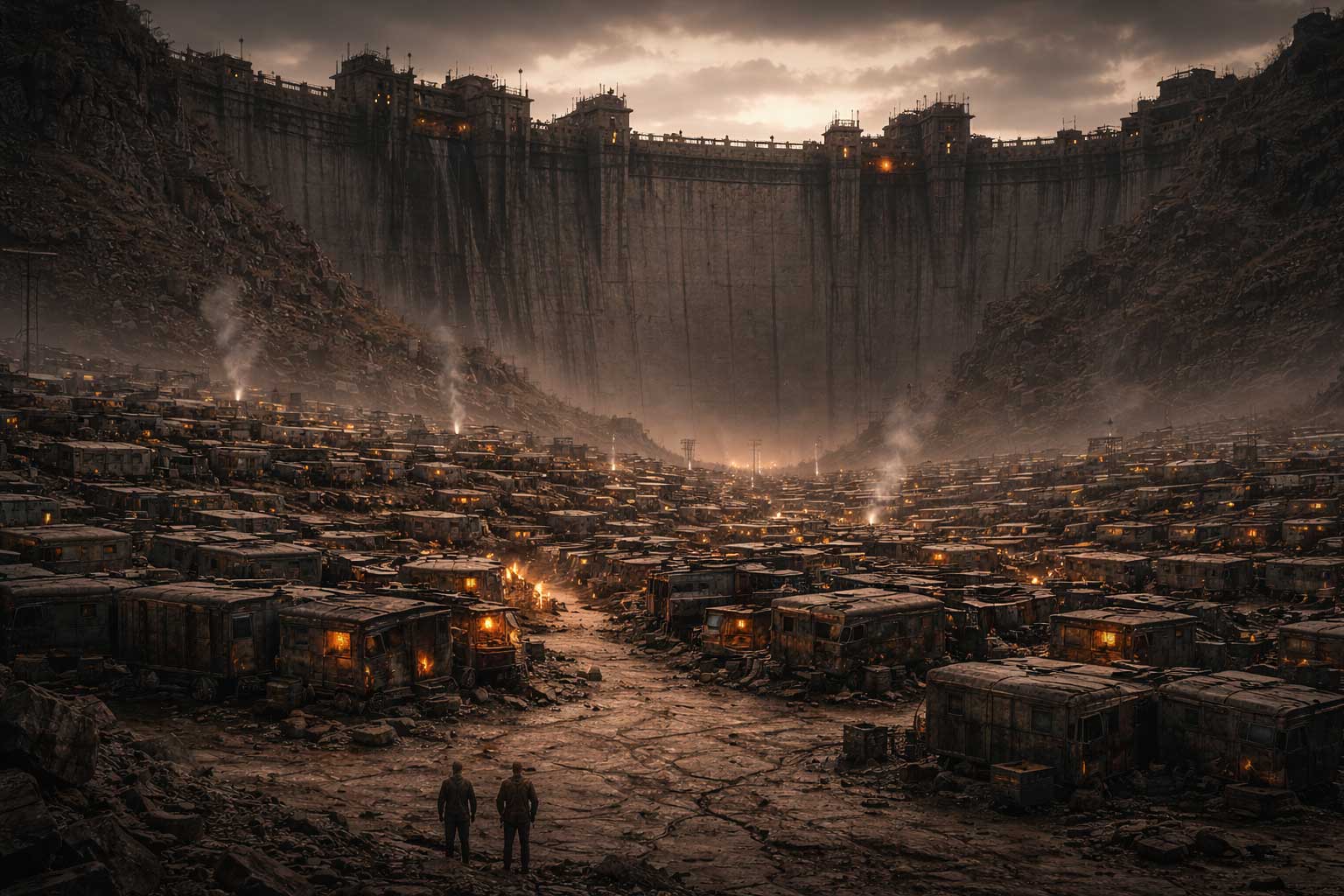
Nobody named it. The name arrived the way most things arrive in the corridor — carried by enough mouths that it stopped needing an origin. The Last City. Some call it the Dam. Travelers who've been there and come back call it neither. They tend not to call it anything at all.

It sits in the basin below a pre-Collapse hydroelectric structure, the largest intact concrete construction still standing in the western corridor. Hundreds of mobile units — vehicles, containers, platforms on wheels — packed into the depression like sediment. The ground shifts here. Not catastrophically, not yet. Enough that nothing is built to last. Everything is built to move. The city stays anyway, held in place not by foundation but by the warlord who controls the high ground above it. His fortress occupies the full length of the dam's top. From there he sees everything. Everything below him pays for the privilege of shelter.

It is the closest thing to a city that remains. Scavengers water there. Convoys stop to trade and leave quickly. Keepers are advised to document from a distance. The warlord does not distinguish between visitors and residents. Everyone inside the basin is subject to the same terms. Nobody has written those terms down. That is deliberate.

Filed by: Keeper Mael, Western Survey Unit — Year 211, Post-Lockdown · Entry compiled from third-party accounts. Direct documentation not attempted.
Fauna Classification · Eastern Transition Belt
12
Entry 12 Fauna Geological Hazard — Active Specimens
Mineral Ursus
Classification: Geological Fauna · Status: Ongoing Documentation

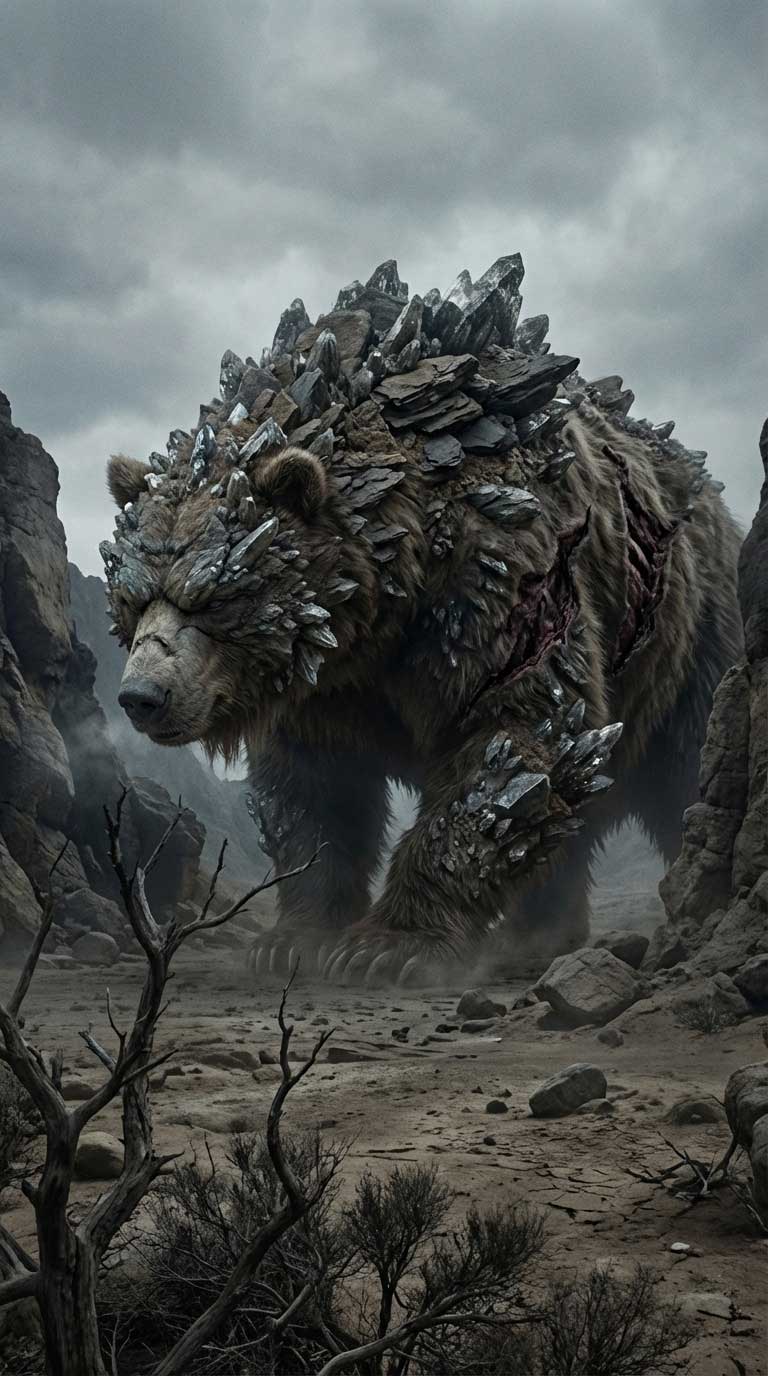
The first confirmed sighting was logged forty years ago near the eastern transition belt, though earlier accounts exist that Keepers have been reluctant to formally classify. The creature is recognizably ursine — the skeletal structure, the gait, the territorial behavior all consistent with pre-Collapse bear populations that survived in the highland corridors. What is not consistent is the surface. Mineral deposits grow from the skin and through it — slate, quartz, dark crystalline formations that emerge from the body the way antlers emerge from bone. Not attached. Grown. The animal does not appear to register them as foreign.

The formations accumulate over the creature's lifetime without stopping. Keepers who have tracked individual specimens across multiple seasons document continuous growth — the deposits thickening across the shoulders first, then the skull, then spreading down the flanks until movement becomes visibly effortful. The cause of death in every documented case is the same. Not predation. Not starvation. The weight of what it has accumulated becomes greater than what its body can carry. It does not shed the formations. It has no mechanism for release.

What the Keepers have not formally resolved — and what this record notes without conclusion — is what happens after. The formations do not stop growing when the animal dies. Within two seasons the remains are indistinguishable from natural geological deposit, except for the shape underneath. There are rock formations in the eastern belt that, if you know what to look for, have the outline of something that was once alive. The minerals remember the shape long after everything else is gone.

Filed by: Keeper Yusra, Eastern Documentation Unit — Year 201, Post-Lockdown
Mineral Ursus
Personnel Log · Keeper Kael · Settlement Seven
38
Entry 38 Personnel Unclassified Subject Council Review Pending
Fourth Iteration — Field Recovery
Document ref: KPR-LOG-0038 · Year 219 P.L. · Filed by Keeper Kael, Settlement Seven

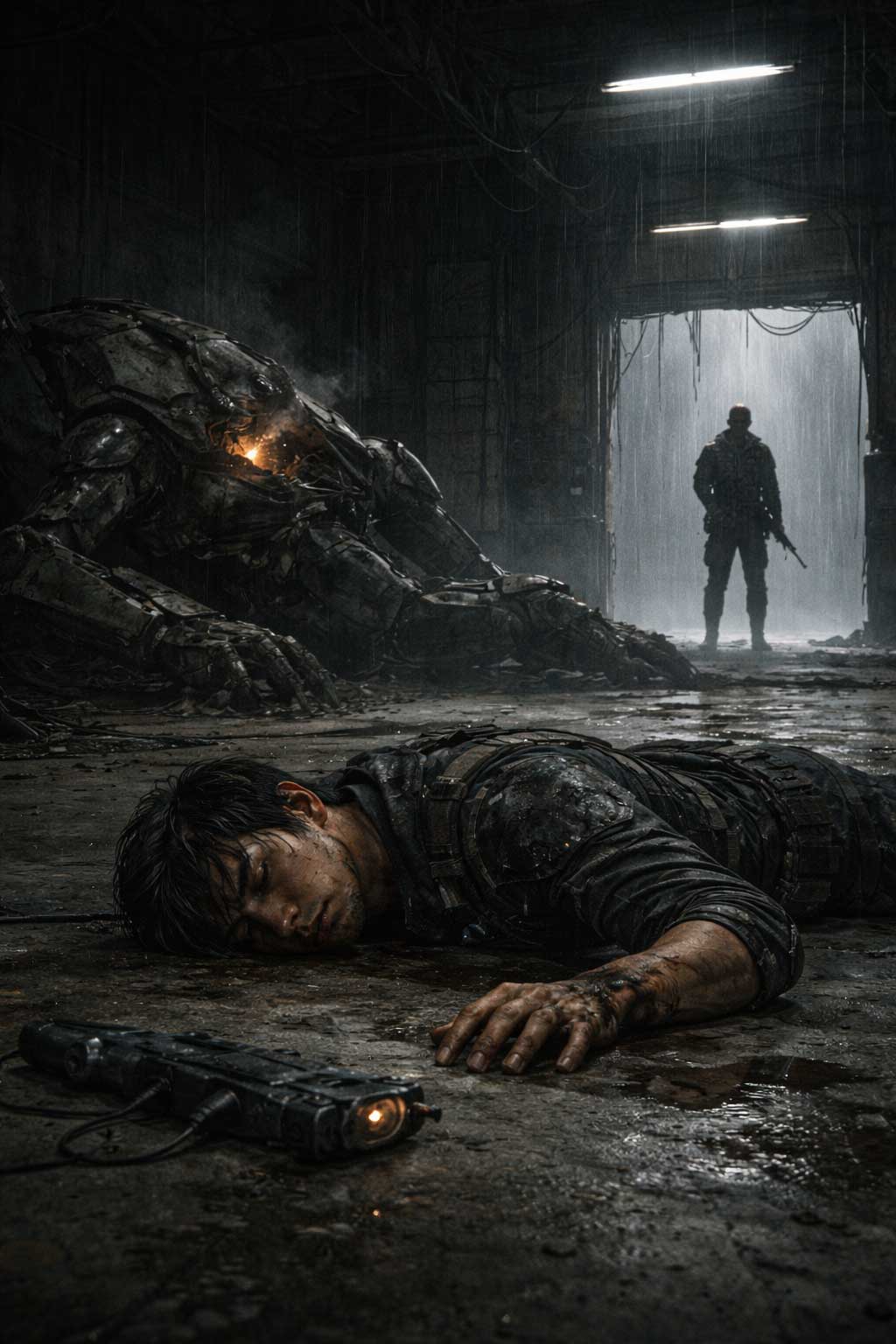
Scouts reported mecha movement two days prior — single unit, active patrol pattern, originating from the collapsed Vault structure four kilometres northeast. Unusual. That ruin has been cold for thirty years. Sera sent Vale to assess. Standard procedure: observe, report, do not engage.

Vale came back with a boy instead of a report. Found him in the hangar of the ruin, unconscious beside a dead mecha. Arc cutter on the ground next to him. Vale said the mecha's power housing had been struck with enough precision that whoever did it either knew exactly what they were doing or had no idea and the ground got lucky — and Vale didn't believe in the ground getting lucky. He carried him five kilometres on foot. The boy had burns on his neck and hands, ribs bruised, nothing fatal. Vault-issue adaptive fabric had already begun sealing the worst of it before Vale got to him. He's been out since. Sera has ordered him kept alive until the council decides what to do with him.

Roth wants a decision by morning. I asked for one more day.

Filed by: Keeper Kael, Settlement Seven — Year 219, Post-Lockdown · Council decision pending. Subject status: alive, unidentified.
Fourth Iteration — Field Recovery
Vault Site · Western Corridor · Nature Control / Production
German Production Vault — Exterior
15
Entry 15 Vault Site Location Approach With Caution Interior: Undocumented
Western Vault Site — Designation Withheld
Classification: Nature Control · Secondary Function Unknown · Status: Inconclusive

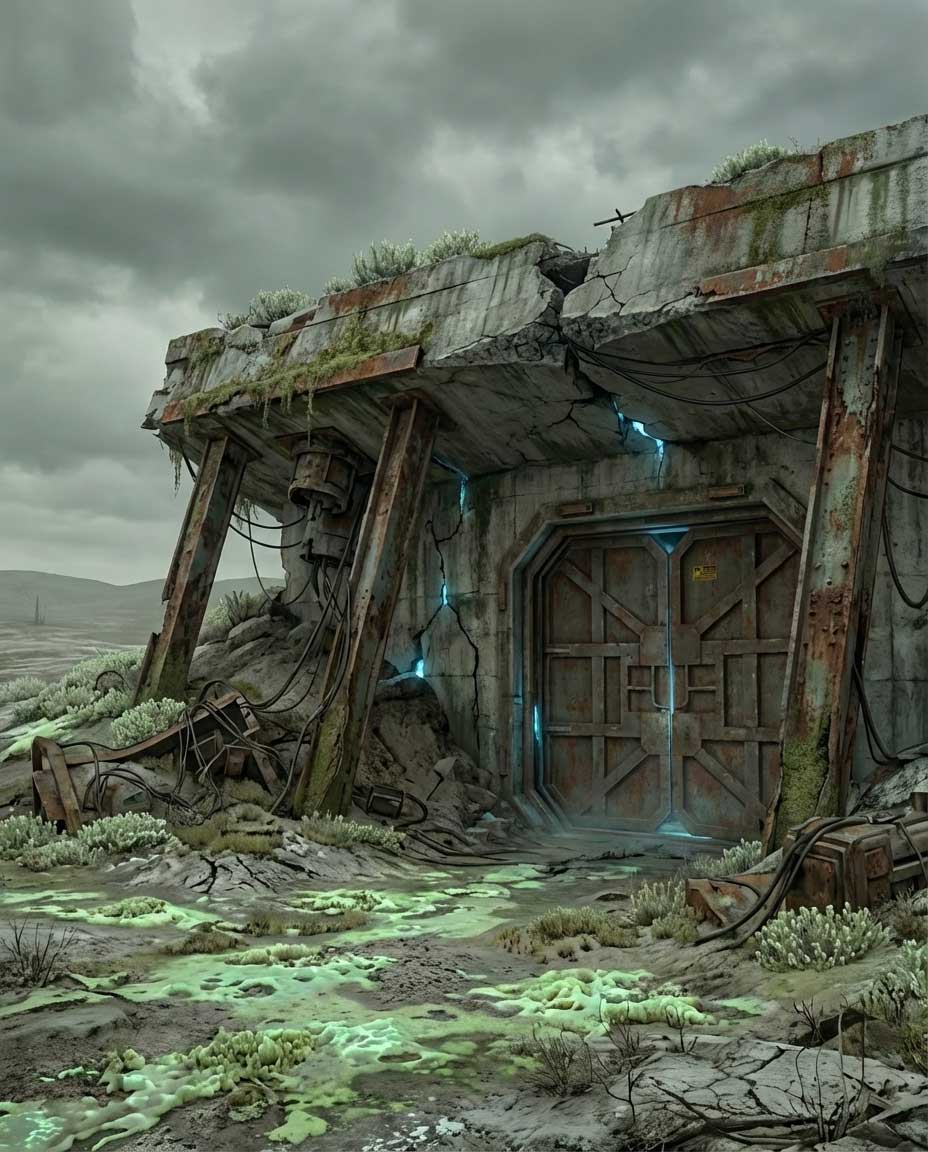
The structure was identified not by sight but by ground. Keeper Fen noted the soil reading wrong — stable in the way that ground near functioning Vault nodes reads stable, that particular absence of micro-movement that experienced surveyors learn to distrust before they can explain why. She spent two days mapping the perimeter before she saw the structure at all. It sits below a collapsed rise, mostly underground, the surface portion broken and weather-worn enough that a convoy moving at speed would log it as a pre-Collapse industrial ruin and not slow down.

The patchwork effect is present but understated. Patches of growth where nothing should grow at this latitude. Three meters away, dead ground. Then growth again, in a pattern that does not resolve into any geometry. She noted the living patches did not feel healthy. Green but wrong. She camped on a dead patch deliberately. The headache began on the second morning and did not stop until she was four kilometres west.

No upper structure remains intact. What remains is underground. The entry points were sealed from the inside. Not locked. Sealed. The distinction matters. A lock anticipates someone with a key. A seal anticipates no one coming at all.

The site is still drawing power from somewhere. No visible infrastructure. No surface conduit. But the ground temperature within thirty meters of the main entry shaft is measurably higher than ambient. Something is still running. It has been running for two hundred years without anyone entering or leaving. Whatever it was built to do, it has been doing it alone.

Filed by: Keeper Fen, Western Survey Unit — Year 207, Post-Lockdown · Follow-up survey requested. Interior documentation: open and unresolved. Keeper Fen retired from field work the following season. She did not cite this survey in her retirement record.